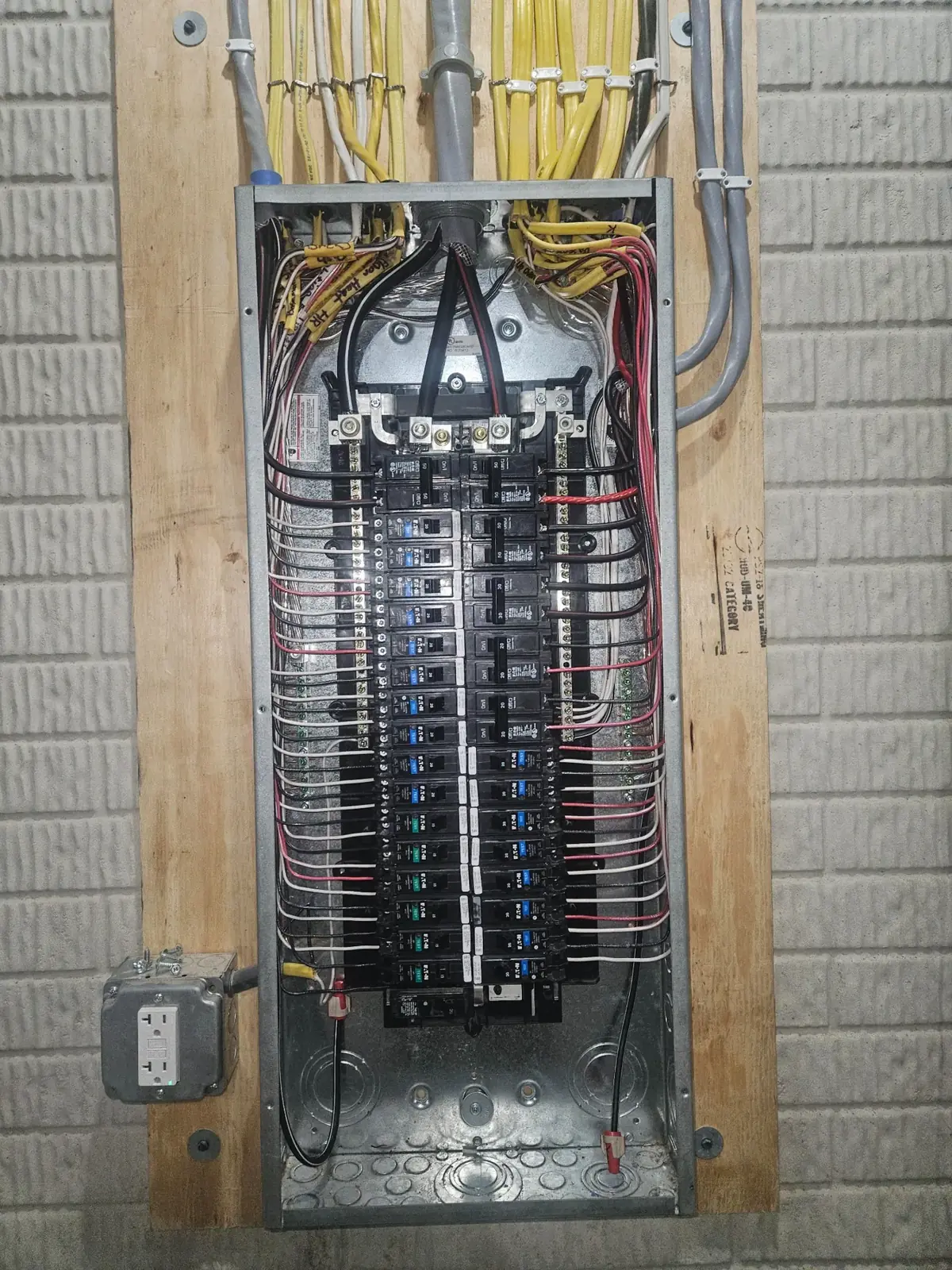
Signs a panel is at its limit
- Every slot is used, often with tandem (double) breakers squeezed in. That is a space problem, and sometimes also a load problem.
- Breakers trip when large loads overlap: dryer plus oven plus air conditioning, for example.
- You are adding a large load: an EV charger, heat pump, induction range, hot tub, sauna or a second kitchen.
- The service is 60 A, or 100 A in a house that has gone mostly electric.
- Fuses, or a panel type with a documented history of breakers failing to trip.
- Heat marks, buzzing or corrosion inside the panel, found during any inspection.
Only the first two are visible from outside the panel. The rest are confirmed with the cover off and a load calculation on paper.
The load calculation
The Ontario Electrical Safety Code sets a method for adding up a house's demand: floor area, heating, cooking, water heating, EV charging and other fixed loads. The result is what decides between a 100 A and a 200 A service, not the number of breakers.
What a 100 A to 200 A upgrade involves
The sequence is the same on most North York houses; the details depend on the existing equipment.
Assessment and load calculation
Existing service size, condition of the mast, meter base and grounding, panel location and what you plan to add. You get a written scope.
ESA notification
The work is reported to the Electrical Safety Authority before it starts. The inspection at the end is part of the job, not an extra.
Toronto Hydro scheduling
A service change needs the utility to disconnect and reconnect at the street or pole. That date is booked in advance and sets the day of the swap.
Replacement
New panel, main breaker, and where needed a new meter base, mast and service conductors. Existing circuits are moved over, labelled and checked for correct breaker sizing. Grounding and bonding are brought up to current requirements.
Inspection and energizing
ESA inspects, the utility reconnects, and every circuit is tested under load before the panel directory is finalized.
Subpanels and partial upgrades
If the load calculation says the service is adequate but the panel is out of space, a subpanel fed from the main panel is often the right fix. It is common for garages, basement suites, workshops and EV chargers located far from the main panel.
Replacing individual breakers, adding AFCI or GFCI protection on existing circuits, or correcting double-tapped breakers are smaller jobs that still need the cover off and a careful look at the rest of the panel.
Commercial distribution
Disconnects, wireways, distribution panels and rooftop equipment feeds follow the same logic at a larger scale. See the project details page for rooftop disconnect work.
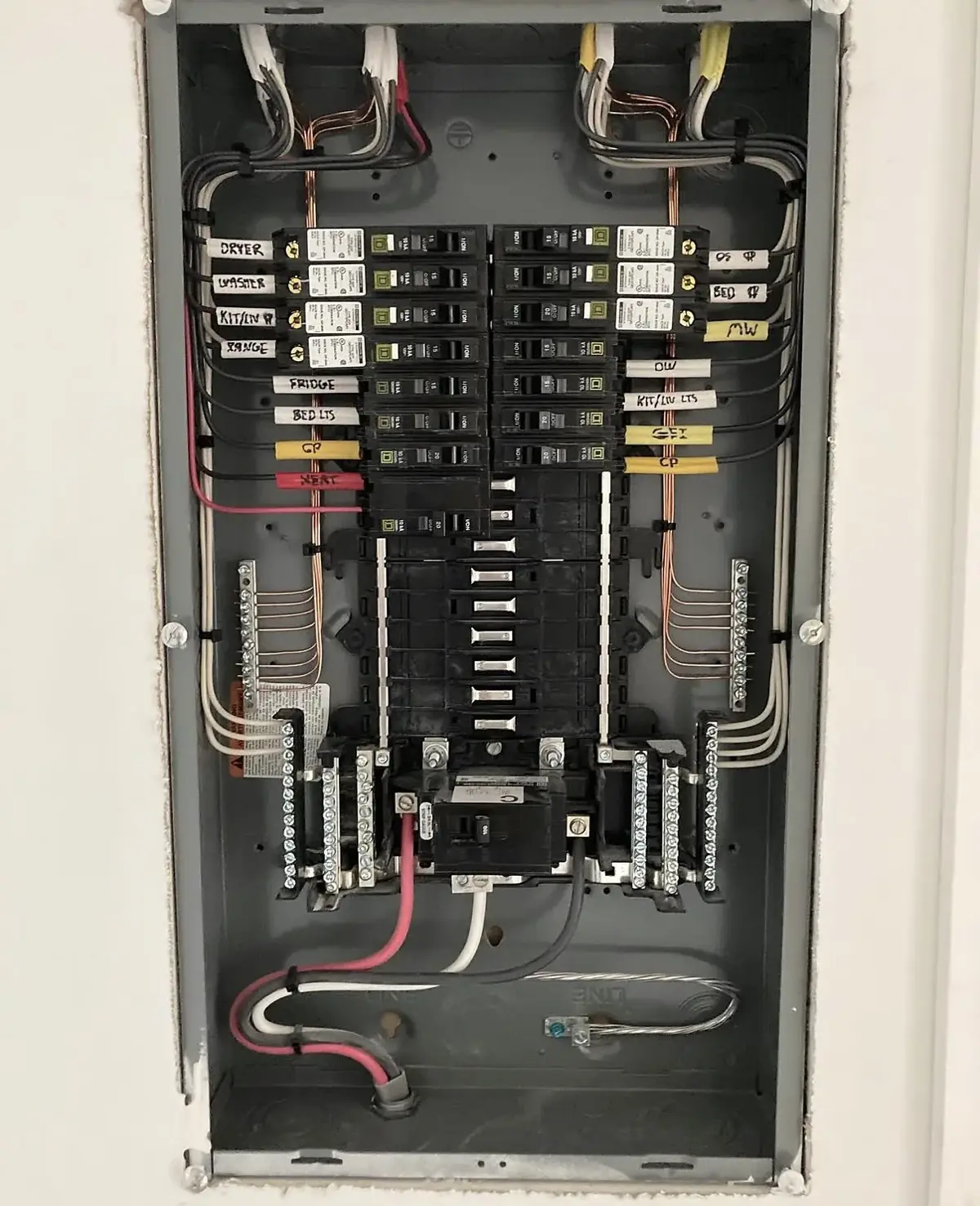
Panel questions
How long is the power off during a service upgrade?
Typically most of a working day. The utility disconnect sets the start, and reconnection follows the ESA inspection. Fridges and freezers are fine for that period if they stay closed.
Can the panel move to a different wall?
Sometimes. Relocation means extending or re-running every circuit, so it is quoted separately. Code sets clearance rules in front of the panel and restricts certain rooms, which is often the reason to move one.
Does a panel upgrade fix old wiring?
No. It replaces the equipment at the panel, not the branch wiring in the walls. If the house has aluminum branch wiring or knob-and-tube, that is a separate assessment and we tell you what we find.